Minimum Breaking Load (MBL) & Working Load Limit (WLL)
Safety comes first. When working with chains, wire ropes, ropes and related lifting products, it is essential to comply with the Minimum Breaking Load (MBL) and the Working Load Limit (WLL) to ensure safe use.
Minimum Breaking Load (MBL)
The MBL (Minimum Breaking Load) is the minimum tensile force a product is guaranteed by the manufacturer to withstand before breaking. For safety reasons, the Working Load Limit (WLL) is considerably lower than this theoretical value. Environmental and application factors may influence actual performance and service life. Always comply with safety regulations and prioritise safe working practices.

Working Load Limit (WLL)
The Working Load Limit (WLL), formerly known as the Safe Working Load (SWL), is the maximum load that can be safely applied to wire ropes, chains, ropes and related accessories. The working load is determined based on the Minimum Breaking Load (MBL), divided by an applicable safety factor.
Under the general warnings, you will find the key characteristics and safety factors applicable to the DX product ranges Chains, Steel wire ropes, Ropes, Eye bolts, ring nuts & screw eyes and Black Pin® Bow and D Shackles. For the teel wire ropes and chains accessories, no standard safety factor applies. The applicable WLL is stated in the individual product specifications.
General safety warnings
- The specified Working Load Limits (WLL) for the product groups must never be exceeded and apply only under straight-line loading conditions.
- The stated Working Load Limits (WLL) are intended for static use. Dynamic loads, such as shock loading or accelerated movements, increase the applied load and may result in product failure.
- All stated Working Load Limits (WLL) apply to new and unused products that are used under normal operating conditions.
- Regular inspection of the supplied and applied products in accordance with the safety regulations applicable in the country of use is mandatory. Inspections must be carried out at least every six months, and more frequently under severe or extreme conditions.

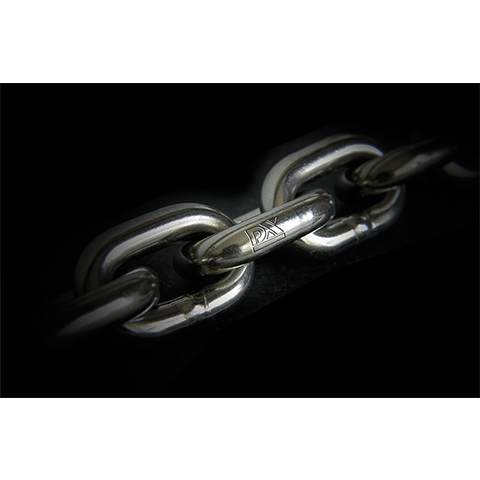
Chains safety factor = 4
First and foremost, it is important to note that our chains are not suitable for lifting or hoisting operations.
To determine the Working Load Limit (WLL) of a chain, the Minimum Breaking Load (MBL) is divided by the applicable safety factor. For chains, this safety factor is 4. Always take the condition of the chain into account, as it may deteriorate due to environmental influences or age. Please note: the WLL for chains applies to static loading only.
Looking for lifting or calibrated chains? We can supply these on request. Please contact us to discuss the available options.
Additional information
- Indicative maximum load: When an indicative maximum load is stated for a chain, the working load is approximate. These chains have not been individually tested during production.
- Calibration: When a chain runs over sprockets or toothed wheels, it is essential that the chain is calibrated. Calibrated chains are available on request. Please contact us to discuss the available options.

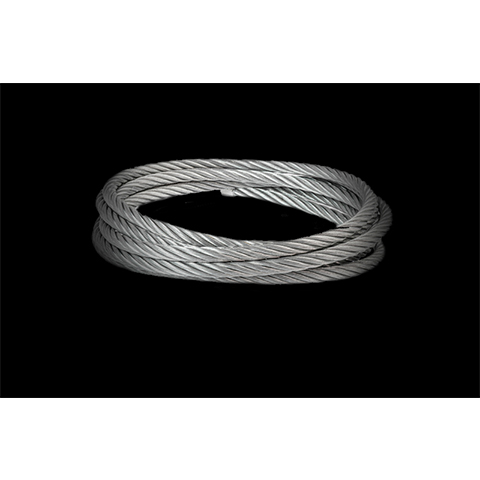
Steel wire rope safety factor = at least 5
First and foremost, it is important to note that our wire ropes are not suitable for lifting operations.
To determine the WLL of a wire rope, the MBL is divided by a safety factor of 5. Always take the condition of the wire rope into account, as its performance may deteriorate due to environmental influences or ageing.
Please note: when a wire rope is manually swaged using a ferrule, the MBL must be reduced by 10%. This automatically results in a lower Working Load Limit (WLL).

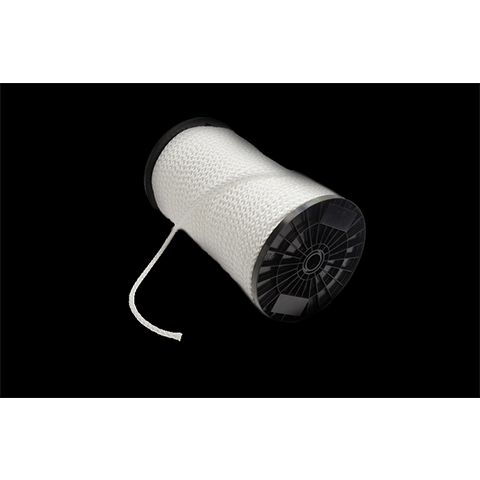
Ropes safety factor = at least 8
To determine the WLL of a rope, the MBL is divided by the applicable safety factor. For ropes, this safety factor is 8. The rope must be free from damage and knots. Shock loading must be avoided at all times. Always take the condition of the rope into account, as it may deteriorate due to environmental influences or ageing.
Please note: always remain outside the snap‑back zone of a tensioned rope. In the event of failure, the recoil can result in serious or even fatal injuries.

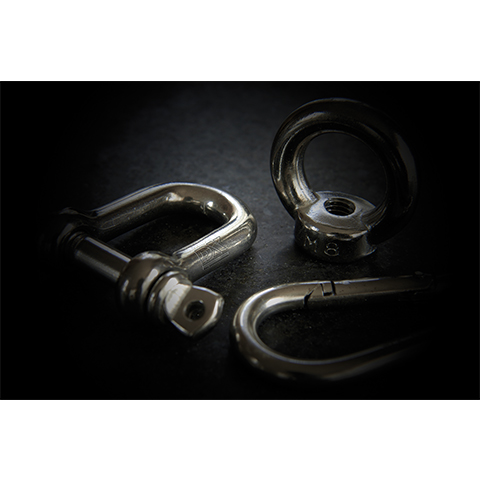
Eye bolts and ring nuts = 6
To determine the WLL of eye nuts and eye bolts, the MBL is divided by a safety factor of 6. Always take the condition of the material into account, as it may deteriorate due to factors such as environmental influences.
The stated WLL applies only if:
- the eye nut is fully screwed on;
- the eye bolt is fully screwed in;
- the eye nut / eye bolt is seated evenly over the entire contact surface;
- the thread length into which the eye nut or eye bolt is installed is sufficient;
- the base material to which the eye nut or eye bolt is attached is capable of withstanding the applied load.
Additional information:
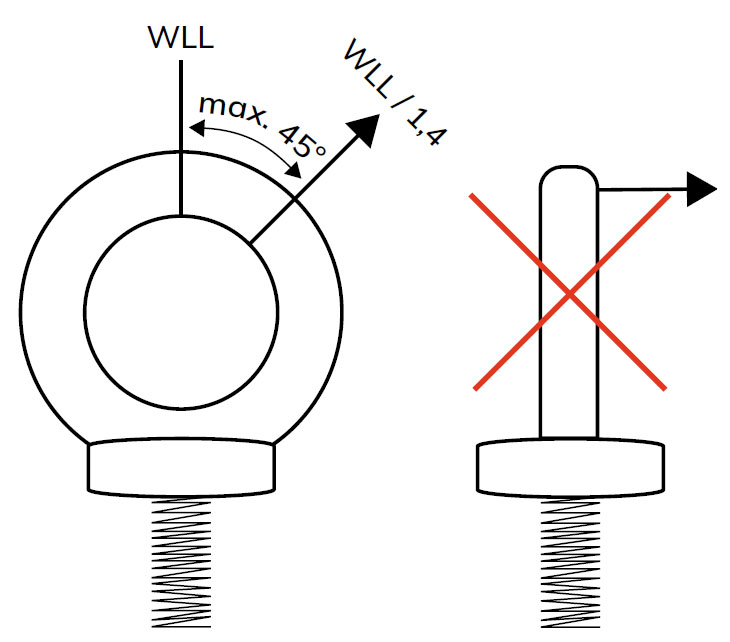
Side loading
The stated WLL applies only when the angle of inclination is 0°. For angles of inclination of up to 45° the indicated WLL must be divided by 1.4 to determine the applicable Working Load Limit.
Our DX eye nuts and eye bolts are not suitable for side loading at angles exceeding 45°.

Black Pin® shackles: safety factor 6
To determine the WLL of our Black Pin® bow and D shackles, the MBL is divided by a safety factor of 6. Always take the condition of the material into account, as it may deteriorate due to factors such as environmental influences.
Talhoutweg 11-15
8171 MB Vaassen
Netherlands
+31-578579231
www.dulimex.nl
Route via Google Maps

ISO 9001 certified